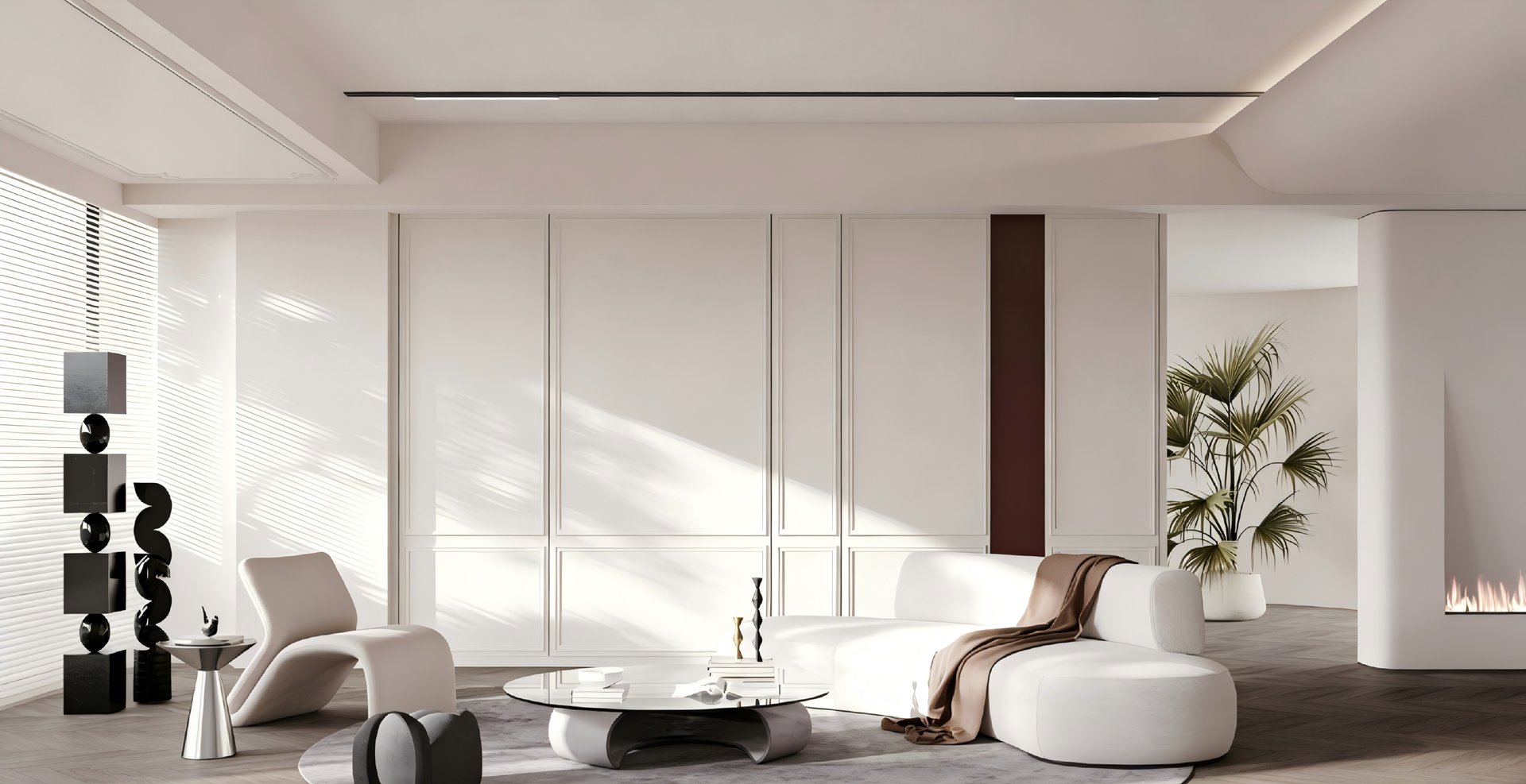

Multi-Cavity Aluminum Alloy Profile System – Premium Structural Frame Material, Customizable Dimensions, Multi-Color Anodizing for Whole-Home Cabinet Customization & Commercial Display
Premium multi-cavity aluminum alloy profiles for cabinet manufacturing. Lightweight, high-strength, fully customizable. Trusted by furniture makers & designers worldwide.
$0.97
Multi-Cavity Aluminum Alloy Profile – the engineering-grade building block for premium furniture systems worldwide. Designed for manufacturers who demand strength without weight, precision without compromise, and unlimited customization without cost penalties.
This Multi-Cavity Aluminum Alloy Profile is a core structural solution for whole-home customization and commercial display setups. Built on a multi-cavity hollow structure, combined with high-strength aluminum alloy material and comprehensive customization services, it delivers excellent load-bearing capacity and stability while matching diverse styles via multi-color finishes—making it the ideal base material for cabinet, display cabinet, and partition frames.
What Is A Multi-Cavity Profile?
Unlike solid aluminum rods or simple hollow tubes, multi-cavity profiles feature an advanced internal chambered structure that delivers superior strength-to-weight ratios. Think of it as aerospace-grade engineering applied to furniture manufacturing.
The Professional Advantage:
Builders of high-end wardrobes, display cabinets, kitchen systems, and commercial installations choose multi-cavity profiles because they eliminate the traditional trade-off between strength and cost. One profile can replace multiple components, simplifying assembly, reducing waste, and accelerating production timelines.
What You Get:
✅ Aerospace-quality 6063-T5 aluminum alloy (stronger than standard profiles)
✅ Multi-cavity hollow structure (lighter than solid, stronger than simple tubes)
✅ Fully customizable dimensions, colors, and finish treatments
✅ Direct factory pricing (no retail markup)
✅ OEM/ODM support for large-scale manufacturing
Perfect For:
Custom wardrobe and closet systems
High-end kitchen cabinetry
Commercial display cabinets
Retail shelving systems
Architectural structural elements
Professional furniture manufacturing

What Makes Multi-Cavity Design Superior?
Traditional Solid Aluminum:
Heavy (more material needed for strength)
Expensive (more material = higher cost)
Wastes material (excess weight adds no value)
Limited applications (too heavy for some uses)
Simple Hollow Tubes:
Lighter than solid
But weaker than needed
Limited structural capability
Often requires reinforcement
Multi-Cavity Profile (The Sweet Spot):
Lightweight (50-60% weight savings vs solid)
Extremely strong (internal chambers distribute stress)
Cost-efficient (less material, more performance)
Versatile (works for countless applications)
The Multi-Cavity Advantage Explained
Cross-Section Design:
A multi-cavity profile features 3-8 internal chambers running the full length of the extrusion. These chambers:
Reduce weight - Less aluminum used per unit length
Increase strength - Chambers distribute stress across the cross-section
Improve rigidity - Multiple support points prevent bending
Enable precision - Hollow structure accommodates fasteners, glass, and panels
Simplify design - One profile can do the work of multiple components
Real-World Impact:
Where a solid profile might weigh 850g/meter, a multi-cavity profile delivers equal or superior strength at 450g/meter. This means:
Lighter furniture (easier to move, install, ship)
Lower raw material costs (less aluminum per unit)
Stronger assemblies (superior load distribution)
Better precision (consistent tolerances)
Material & Alloy Properties
Aluminum Alloy Grade:
Type: 6063-T5 (aerospace-quality)
Tensile Strength: 215 MPa (excellent strength-to-weight)
Yield Strength: 170 MPa (maintains shape under load)
Elongation: 8-12% (some flexibility, not brittle)
Hardness: HB 73-85 (durable surface resistance)
Corrosion Resistance: Excellent (naturally oxidized layer)
Extrusion Quality:
Method: Hot aluminum extrusion (precision-engineered)
Tolerance: ±0.1mm (aerospace-grade precision)
Straightness: ±2mm per meter (excellent for assembly)
Surface Finish: Smooth, ready for anodizing or powder coating
Structural Specifications
Multi-Cavity Configuration:
Cavity Count: 3-8 internal chambers (design-dependent)
Cavity Depth: 8-12mm per chamber
Wall Thickness: 1.5-2.5mm per chamber (depends on design)
Cross-Sectional Area: 45-120 mm² (varies by profile size)
Linear Weight: 0.15-0.45 kg/meter (design-dependent)
Strength Properties:
Bending Strength: Exceeds requirements for 10-50kg loads
Compression Strength: 500+ MPa (handles heavy loads)
Torsional Rigidity: Excellent (resists twisting)
Impact Resistance: Good (won't shatter or crack)
Dimensional Tolerances:
Length: ±1mm per meter (or custom-cut to exact length)
Cross-section: ±0.05mm (precision machining grade)
Surface Flatness: Better than ±0.5mm (excellent for mounting)
Core Advantages: Triple Empowerment of Multi-Cavity Structure, Material & Customization
Multi-Cavity Hollow Structure: Balance of Load-Bearing & LightweightFeaturing a multi-chamber hollow design, it maintains structural strength while reducing weight compared to traditional solid profiles: a single profile can bear over 50kg of uniform weight, stably supporting cabinet doors, display cabinet glass, etc.; the hollow structure also offers basic sound and heat insulation, suitable for cabinets, partitions, and more.
6063-T5 Aluminum Alloy Base: Durability & Texture CombinedMade of aerospace-grade aluminum alloy, with surface spraying/electrophoresis treatment:
Structural Performance: The profile has a hardness of over 12HV, resisting deformation and corrosion—no warping or rusting with long-term use, suitable for humid environments like kitchens and bathrooms.
Aesthetic Texture: Available in matte black, dark gray, brushed gold, pure white, etc.—matte finishes fit minimalist styles, while brushed options suit luxury styles, meeting diverse aesthetic needs.
Workability: Easy to cut and assemble, it can be quickly joined into frames with corner brackets and connectors, greatly improving customization efficiency.

Color & Finish Options
Finish Type | Appearance | Durability | Best For | Cost |
|---|---|---|---|---|
Anodized Silver | Bright, reflective, clean | 15-20 years | Modern, contemporary | Base |
Brushed Black | Matte, sleek, sophisticated | 15-20 years | Luxury, modern | Base |
Rose Gold Anodized | Warm, elegant, trendy | 15-20 years | Upscale, contemporary | +10% |
Champagne Gold | Warm, classic, elegant | 15-20 years | Traditional, luxury | +10% |
Bronze Anodized | Dark, rich, natural | 15-20 years | Architectural, vintage | +10% |
Powder Coat (Custom) | Any color imaginable | 20-25 years | Custom projects, branding | +15-25% |
Mirror Polished | High-gloss, reflective | 10-15 years | Premium, statement pieces | +20% |
Matte Clear Anodize | Natural aluminum, subtle | 15-20 years | Industrial, minimalist | Base |
Customization Options
Dimension Customization:
Width: Any size from 20mm to 150mm
Depth: Any size from 10mm to 100mm+
Length: Standard 6-meter extrusions, or custom-cut to exact length
Wall thickness: Adjustable based on load requirements
Cavity configuration: Custom chamber arrangement available
Finishing Customization:
Anodize thickness: 8-25 microns (affects durability)
Color matching: Custom Pantone color matching available
Texture: Smooth, brushed, or custom texture
Surface treatment: Matte or high-gloss finish
Deep Processing:
CNC machining (drilling, milling, tapping)
Bending (to specific angles, with custom tooling)
Welding and assembly (custom structural solutions)
Powder coating (complete assembly coating)
Load Rating Chart
Profile Type | Linear Weight | Safe Load* | Load Points | Typical Use |
|---|---|---|---|---|
Light-Duty | 150-250g/m | 10-20kg | Every 1 meter | Decorative shelving |
Medium-Duty | 250-350g/m | 20-50kg | Every 1 meter | Standard cabinetry |
Heavy-Duty | 350-450g/m | 50-100kg | Every 0.5m | Commercial, dense storage |
Extra-Heavy | 450g+/m | 100+kg | Per design | Specialized applications |
APPLICATIONS & USE CASES
Where Multi-Cavity Profiles Shine
High-End Residential:
Custom wardrobe systems (bedroom, walk-in closets)
Kitchen cabinetry (wall cabinets, island systems)
Display cabinets (wine, art, collectibles)
Built-in shelving (living room, study, office)
Bathroom vanity systems
Entertainment centers
Commercial & Retail:
Retail display fixtures
Store shelving systems
Office cabinetry and storage
Hotel suite wardrobes
Restaurant kitchen systems
Showroom displays
Architectural & Specialty:
Building facade elements
Structural support systems
Interior partitions
Custom metalwork
Lighting system mounting
Modular furniture systems


WHY CHOOSE OUR MULTI-CAVITY PROFILES?
Our Competitive Advantages
✅ Direct Factory Pricing – No wholesaler or distributor markup. You get manufacturer pricing.
✅ Aerospace-Grade Quality – 6063-T5 aluminum (the same alloy used in aircraft structural components)
✅ Full Customization – Any dimensions, any finish, any quantity. No minimum order constraints.
✅ Precision Extrusion – ±0.1mm tolerances (better than industry standard ±0.3mm)
✅ Complete Service – From design consultation to custom cutting, machining, and coating
✅ Fast Turnaround – 3-4 weeks for custom extrusions (industry standard is 6-8 weeks)
✅ Sustainable Manufacturing – 100% recyclable aluminum, eco-friendly anodizing process
✅ Technical Support – Engineering consultation included (no extra charge)
✅ Vertical Integration – We also manufacture your complete furniture system (doors, hinges, hardware)
✅ Global Shipping – Experienced with international logistics, export documentation, and customs
Supports size customization (length 0.5m-6m, cross-section width 20mm-100mm), color customization,cavity structure customization , and surface process customization to meet structural and aesthetic needs of special frames.

COMPARISON WITH ALTERNATIVES
vs. Solid Aluminum Rod
Factor | Multi-Cavity | Solid Rod |
|---|---|---|
Weight | 50% lighter | Heavy |
Cost | Lower | Higher |
Strength | Equal or better | Good |
Machinability | Excellent | Good |
Appearance | Modern, clean | Industrial |
Application Range | Broad | Limited |
Assembly | Simple | Often requires reinforcement |
vs. Steel Profiles
Factor | Multi-Cavity Aluminum | Steel |
|---|---|---|
Weight | 1/3 weight of steel | Heavy |
Corrosion | Rust-proof | Requires coating |
Cost | Higher material cost | Lower |
Installation | Easier, lighter | Requires heavy equipment |
Aesthetic | Modern, premium | Industrial |
Customization | Excellent | Limited |
Long-term value | Superior (durability) | Good (but maintenance) |
FAQ
Q1: What exactly is a "multi-cavity" aluminum profile, and why is it better than regular aluminum?
A: A multi-cavity profile features multiple internal hollow chambers running along its length, unlike regular solid aluminum or simple hollow tubes. Think of the difference between a solid wooden beam and a steel I-beam—the I-beam has more strength with less weight because of its internal structure. Multi-cavity profiles use the same principle: the internal chambers distribute forces more efficiently across the cross-section, giving you maximum strength with minimum weight. This means lighter, stronger, and more cost-effective furniture systems.
Q2: What's the difference between "6063-T5" aluminum and other aluminum types?
A: 6063-T5 is an aerospace-grade aluminum alloy specifically engineered for precision extrusions like furniture frames. The "6063" refers to the alloy composition (contains magnesium and silicon for strength), and "T5" means it's been heat-treated to a specific hardness level. Compared to other aluminum types: lower-grade 6061 is weaker and heavier; higher-grade 7075 is stronger but much more expensive and less suitable for extrusion. 6063-T5 is the "sweet spot"—ideal strength-to-weight-to-cost ratio for furniture manufacturing.
Q3: How much lighter are multi-cavity profiles compared to solid aluminum?
A: Typically 40-60% lighter than equivalent solid aluminum, while maintaining equal or superior strength. A solid profile that weighs 1000g/meter might deliver the same structural performance as a multi-cavity profile at only 400-600g/meter. This weight savings translates to: easier installation (less strain on fasteners), lower shipping costs (less weight = lower freight), and better aesthetics (slimmer, lighter profiles look more sophisticated).
Q4: Can I get custom dimensions? What sizes are available?
A: Fully customizable. We manufacture profiles to your exact specifications: width (any size), depth (any size), wall thickness (adjustable), cavity configuration (can design custom chambers). Standard sizes range from 20-150mm width and 10-100mm+ depth, but there are virtually no limits. Lead time for custom extrusions is 3-4 weeks. Provide your CAD drawing or detailed specifications, and we'll quote and manufacture exactly what you need.
Q5: What load capacity do these profiles support? Can I use them for heavy-duty applications?
A: Load capacity depends on the specific profile design, but multi-cavity profiles typically support 10-100kg+ of load per meter (depending on profile size and chamber configuration). We offer "light-duty" (10-20kg), "medium-duty" (20-50kg), "heavy-duty" (50-100kg), and custom "extra-heavy" designs. For applications requiring specific load ratings, provide us your load requirements and support spacing, and we'll engineer a profile that exceeds those specifications. Professional load calculations are included in our design consultation.
Q6: How precise are the dimensions? Will all profiles be identical?
A: Aerospace-grade precision: ±0.1mm tolerance (industry standard is ±0.3mm). This means every profile is nearly identical, which is crucial for assembly of complex furniture systems. Straightness tolerance is ±2mm per meter, and surface flatness is better than ±0.5mm. These tight tolerances ensure that components fit together perfectly without shimming or adjustment, reducing assembly time and labor costs.