Compare Architectural & LED Aluminum Purchase Scope
Compare material, fabricated members, accessory kits and complete systems on a controlled delivered-item basis.
Explore the application

Six purchase boundaries
The same aluminum appearance can hide very different order obligations. Establish the controlled delivered item, then compare quantity and price on that same basis. The following table is an editorial purchase checklist, not an engineering specification or a universal bill of materials.
| Purchase | Controlled reference | What to list | Evidence to resolve |
|---|---|---|---|
| Architectural full-length profiles | Section schedule, material and finish | Profile lengths, quantities, protection and exclusions | Material, dimensional and finish evidence; system acceptance remains separate |
| Fabricated window / facade members | Fabrication and assembly drawings | Cutting, machining, thermal-break assembly, accessories and identification | Controlled interfaces, fabrication checks and specified assembly evidence |
| Complete architectural system | Project package and approved configuration | Profiles, hardware, seals, glazing boundary, assembly and installation scope | Project-specific review and evidence for the offered configuration |
| Empty LED channel | Section drawing and finish | Channel lengths, quantity and end conditions; accessories excluded unless listed | Section fit and material/finish evidence; no complete-lighting rating implied |
| LED channel accessory kit | Channel, cover and accessory references | Covers, end caps, clips, connectors and cutting | Exact combination fit, sample identity and agreed acceptance criteria |
| Complete lighting assembly | Lighting package and operating conditions | Tape, electronics, wiring, assembly and supplied mounting components | Relevant complete-product evidence set by the responsible lighting team |
Make quotation units comparable
- Profiles by mass or length
- Record the offered unit and the drawing or agreed basis behind conversion. Do not convert between mass, length and piece price without a controlled quantity basis.
- Fabricated components by piece or set
- Define what one piece or set includes, its revision and the operations completed. Separate machining, finish, accessory and assembly exclusions.
- Complete packages
- List all included components, documentation and services. Record design coordination, glazing, electrical, installation and transport boundaries rather than assuming a project or lighting package includes them.
- One-time and repeat charges
- Separate tooling, trials, samples, fixtures and later repeat-order pricing. Identify ownership and revision-change terms in the written offer.
Use a six-step review
1. Freeze the reference
Use one drawing and component revision register for both offers. Resolve mismatches between cross-section and assembly documents.
2. List operations
Mark each manufacturing, finishing and assembly operation as included, excluded or awaiting clarification.
3. Register accessories
Identify every supplied reference and quantity. Do not treat a photograph or representative kit as an agreed delivery list.
4. Define evidence
Separate material, dimensional, finish, interface and complete-assembly evidence. Record the responsible reviewer.
5. Align delivery
Compare quantity, destination, packing, stated schedule and commercial basis for the same package.
6. Record open questions
Keep unresolved substitutions, sample actions and exclusions visible before requesting a final written offer.
Two practical comparison examples
For a window project, an extrusion offer and a fabricated-frame offer can both describe the same section family. Ask the frame supplier which machining, joints, seals, hardware and inspection are included, then compare the separately defined scope. Do not treat an extrusion unit price as the price of a completed frame.
For a lighting run, an empty channel and an accessory kit may use similar photographs. Count covers, end caps and mounting parts explicitly; then identify whether tape, drivers, wiring and assembly are excluded. A fitted diffuser sample demonstrates one interface review, not complete electrical, optical or environmental approval.
Questions buyers should resolve
Can I compare every offer by price per kilogram?
Only after establishing an appropriate common basis. Fabrication, accessories and complete systems may have obligations that a material-mass price does not represent.
Is a kit a complete installed product?
Use the written bill of materials and service boundary. A kit may exclude electrical parts, glass, installation or other project work.
Do similar photos establish equivalent scope?
No. Compare controlled references, inclusions, exclusions and evidence for the actual delivered item.
Where do I record missing quotation items?
Use the quote-scope checklist and reply tracker, then ask the supplier to clarify the written offer before order release.
Apply the comparison to your purchase
Architectural profile procurement
Control the drawing, delivered scope, accessory interfaces and acceptance evidence.
Windows and curtain walls
Control the drawing, delivered scope, accessory interfaces and acceptance evidence.
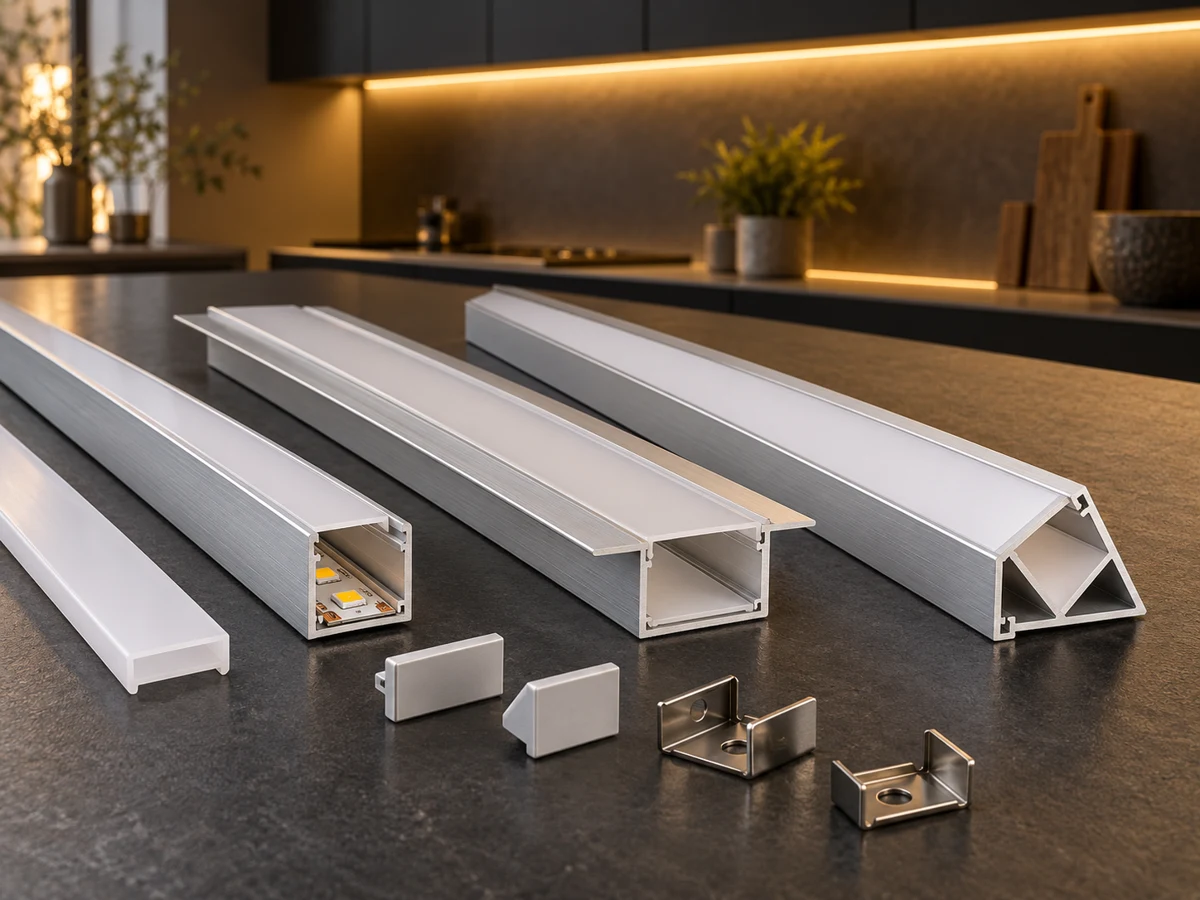
LED channels and accessories
Control the drawing, delivered scope, accessory interfaces and acceptance evidence.
Reference boundary
WICONA’s window and facade families and KLUS’s separate extrusion and cover catalogs illustrate distinct product scopes. The table and review sequence above are AlumHome editorial guidance; the manufacturers do not endorse it or the linked company research.
WICONA windows · WICONA facades · KLUS extrusions · KLUS covers
Reviewed 3 October 2026. Confirm project-specific technical and acceptance requirements with the responsible professionals.