Extrusion & Drawing
Prepare an aluminum profile, tube, rod or wire requirement with a clear drawing and acceptance scope.
Start with the delivered scope
Extrusion forms a section through a die; drawing reduces material through successive dies. These are distinct operations, not interchangeable labels.
AlumHome buyer checklist · Updated 2 October 2026. Use this to prepare questions; confirm the actual engineering and acceptance requirements with the responsible parties.
Build the requirement
- Section and drawing
- Provide a dimensioned section, units, drawing revision and the features that must fit or assemble with another part.
- Material condition
- State the required alloy designation and temper. Ask the producer to identify the proposed material and processing sequence rather than accepting a generic aluminum description.
- Order form
- Record cut length, quantity, batch split and whether delivery is as full lengths, cut blanks or finished components.
- Tooling
- Ask whether an existing die is available or new tooling is needed. Record the tooling charge, ownership, maintenance responsibility and sample-approval stage.
- Acceptance
- Identify critical dimensions, straightness or fit requirements, finish expectations and the documents you want supplied with each batch. Agree the actual tolerances with the producer.
Questions for the supplier
- Question 1Which forming, heat-treatment and finishing operations are performed at the named production site?
- Question 2What will the first sample represent, and which drawing revision will it be checked against?
- Question 3Are cutting, drilling, protective film and packing included, or quoted separately?
Avoid these comparison gaps
- A price for an unprocessed full length is not directly comparable with a delivered machined part.
- A shared section outline does not establish identical alloy, temper, tolerance or surface acceptance.
- Do not approve production from a photograph alone when dimensions or mating features matter.
Your next step
Prepare a sourcing brief
Download a structured draft locally; no information is sent.
Read the checklist →Compare supplier responses
Check differences in delivered scope before comparing price.
Read the checklist →Explore the relevant product form
Connect the process to material and dimensional fields.
Read the checklist →
Technical background & source boundaries
- The Aluminum Association — Processing 101Official background reference. This checklist is AlumHome editorial guidance, not a supplier endorsement or a replacement for the applicable specification.
Machining, samples and finished-part delivery

Aluminum Cutting & CNC Machining Procurement
Turn a controlled drawing into a comparable quotation for cut lengths and finished machined parts.
Read the guide →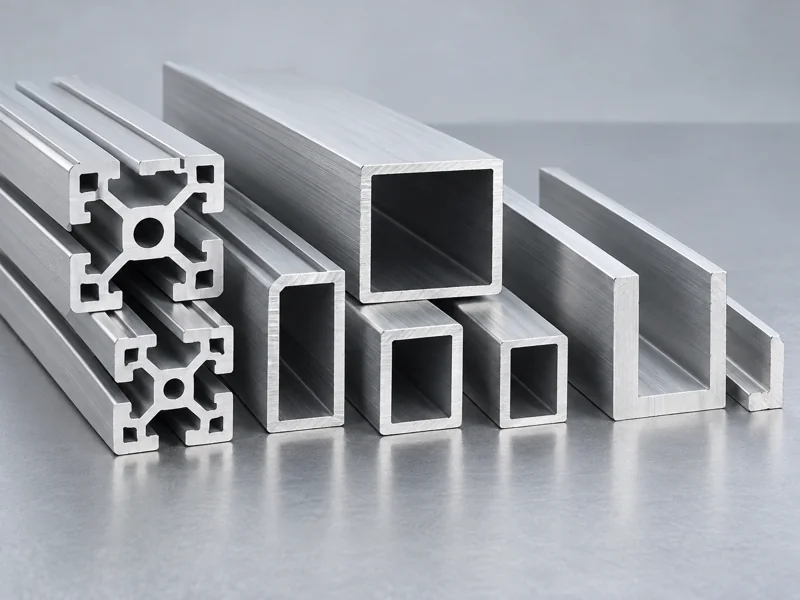
Aluminum Sample & Production Acceptance Guide
Keep sample identity, drawing evidence, deviations and production release decisions traceable.
Read the guide →