Aluminum for Electronics & Thermal Applications
Prepare enquiries for housings, plates and heat-sink components around the actual interfaces, operating conditions and agreed verification plan.
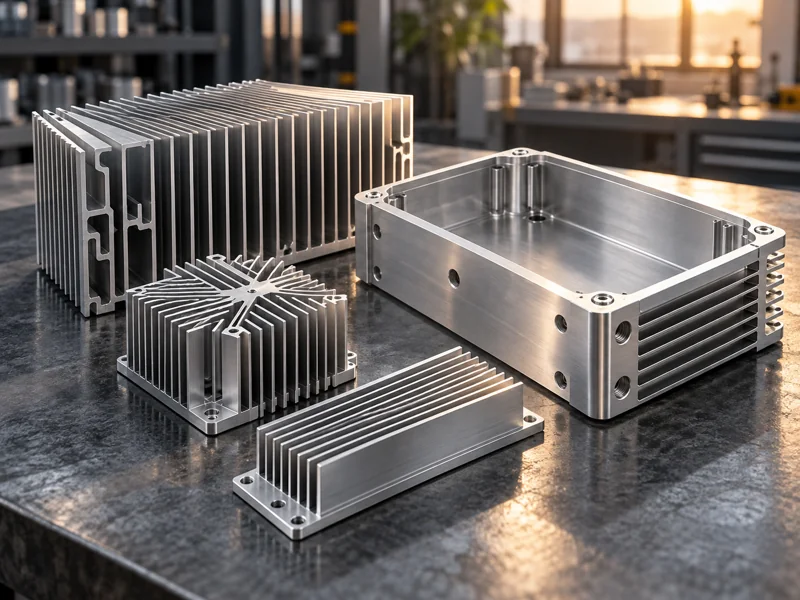
Inputs for a useful supplier conversation
- Component boundary
- Identify a housing, plate, extruded heat sink, cast component or assembly. State whether covers, fasteners and other mating parts are included.
- System conditions
- Provide the system owner's operating and thermal requirements. The material form alone does not establish performance in the complete system.
- Contact interfaces
- Mark contact faces, mounting points and required geometry. State who controls the relevant surface and dimensional acceptance criteria.
- Fabrication and finish
- Identify holes, threads, machining, masking and appearance requirements. Ask how processing and finishing affect the specified interfaces and how they will be checked.
- Testing and approval
- Agree sample quantity, system-level or component-level testing as applicable, and who approves the result. Supplier illustrations are not performance evidence.
- Handling and packing
- Describe protection of contact surfaces and any cleanliness or handling requirements set by the project. Agree how labels and lot documents remain linked.
Three comparison traps
Generic heat-sink claim replaces verification
Geometry, interfaces and operating conditions remain part of the requirement. Obtain a defined test or design review instead of assuming any finned extrusion will perform adequately.
Finished interfaces omitted from the offer
Check whether the price includes machining and inspection of required mating surfaces after the relevant finishing operations.
Assembly-level claims inferred from material documents
A traceable material record can support material identity but does not on its own establish the complete product's thermal or enclosure performance.
Move from requirements to sourcing
Choose the relevant product form, then review the manufacturing and acceptance boundary. Related links are research routes, not confirmation of stock, suitability or supplier qualification for this application.
Evidence boundary and references
These are AlumHome editorial procurement questions, not a design calculation, regulatory determination or approval of the complete product. The responsible project or product professional must set the applicable design and acceptance requirements. No universal performance value or certification claim is made.
Aluminum Association manufacturing background provides background only; it does not endorse this checklist or any listed supplier. Reviewed 2 October 2026.
Define the extrusion requirement for this application
Connect extrusion geometry to heat load, airflow, installation space and the finished contact surface.
Choose the delivered component before researching companies
Extruded heat-sink components
Use the existing heat-sink selection page for geometry, designer-provided operating conditions, contact machining and its downloadable application checklist. A published thermal topic is not approval for the installed assembly.
Extruded housings and enclosure sections
Start with the profile research category and a controlled housing drawing. Separate raw section, machined enclosure, covers, finish and assembly scope. General profile records do not establish enclosure performance or a matched housing supplier.
Plate and cast component requirements
Define plate stock, a machined plate or a cast part separately. Review the existing sheet-and-plate and casting pages before researching companies; the three thermal-topic companies below are not confirmed suppliers for these purchase scopes.
Existing China company-source leads for heat-sink research
Reuse the three source-topic records already linked from the heat-sink page. They describe company-published topics, not verified order capability, current availability, thermal results or approved suppliers. Open the company record for identity, location, exact source URLs and review date. No fresh supplier response is recorded.
Xingfa Aluminium
Radiator / heat-sink profiles are named in the retained industrial catalog review. Request the actual section and separate extrusion supply from assembly validation.
Huajian Aluminium
Heat dissipation is a named industrial application topic. Confirm the contracting group company, order plant and proposed contact-face processing.
Fenglu Aluminium
The retained heat-sink catalog includes different constructions. Confirm whether the proposed item is extruded, machined or another construction before comparing offers.
Keep a heat-sink catalog topic separate from evidence for an enclosure, plate or casting. Confirm the actual delivered construction, producing company and order plant for your drawing.
Prepare an item-specific inquiry and compare written scope
- Record the controlled requirement
- Identify the drawing revision, delivered component, alloy and temper, quantity, machining, finish, assembly boundary and required evidence. Keep the project designer responsible for operating conditions and acceptance requirements.
- Review the proposed sample
- Link sample identity, material documents, contact interfaces and proposed testing to the same finished item. Material records or supplier images alone do not establish thermal or enclosure performance.
- Compare equivalent offers
- Align delivered construction, included operations, packing, destination and agreed inspection. Mark missing evidence and assumptions before comparing prices; the reply tracker begins with Not contacted.
These tools retain drafts in your browser and provide downloads for manual review and sharing. Opening a route does not submit an inquiry, contact a company or obtain an offer.